
 Eurovision News
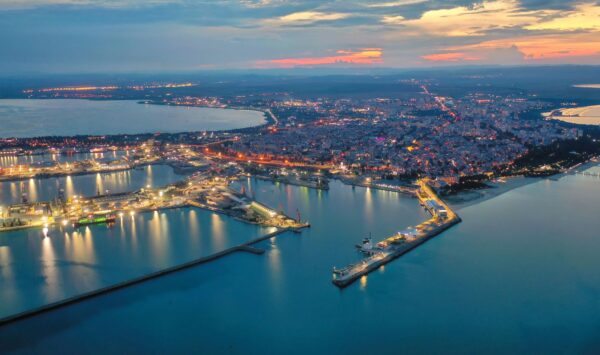

Hello Europe, Bulgaria is gearing up in full steam to welcome the Eurovision bandwagon along with its glam, glitz and glitter for the first time in ESC history. The country has kicked off preparations for the upcoming 2027 Eurovision Song Contest. How many countries will compete in the contest next year? Will there be any new countries joining the club? Will we see any returning nations? Will there be any withdrawals? Let’s check out who’s heading to Bulgaria next year….
Circa 40 countries are expected to partake in the competition next year in the Bulgaria. The maximum number of countries permitted to compete in next year’s contest is 44, whilst the Grand Final will feature a maximum of 26 nations battling for the coveted Eurovision trophy. A maximum of 38 countries will battle in one of the two semi-finals.
10 countries from each semifinal will proceed to the Grand Final, thus 20 nations will join the 2027 Eurovision winning country, Bulgaria and the Big Five ( United Kingdom, Germany, Italy, Spain and France).
A total of 32 countries have so far confirmed their participation at the upcoming 2026 Eurovision Song Contest in Bulgaria.
The deadline for broadcasters to apply for participation concluded on the 15th September 2026 whilst the grace period for applicant countries to withdraw their application without facing a financial penalty concludes in the middle of October 2026. Last year the EBU extended the grace period until December 2026, it is yet to be seen if the same extension will be implemented again.
This article will be updated constantly in the lead up to the EBU’s official announcement of the 2027 Eurovision list of participating countries.
Will we see any debuts in 2027?
Both Kosovo and Kazakhstan are keen to enter the competition but do not currently comply with the EBU’s rules and regulations in order participate in the contest.
Canada’s national broadcaster CBC has been granted full EBU membership on 25th June at the EBU’s General Assembly in Prague. On the 1st of July CBC and the EBU confirmed Canada’s debut and participation at the Eurovision Song Contest in 2027. Hence we will be seeing a new country debuting at the Eurovision Song Contest for the first time since 2015 when Australia debuted in the competition.
Liechtenstein’s broadcaster 1FL TV has to become an full member of the EBU in order to partake in the contest.
Liechtenstein
Liechtenstein‘s national broadcaster 1FL TV is not an EBU member therefore it is not eligible to take part in the contest.
Kosovo
Kosovo is not a member of the ITU (International Television Union), one of the key requirements to become an active EBU member. Thus RTK is not an EBU member and is currently ineligible to join the contest. The country is neither a member of the United Nations or the Council of Europe. The Eurovision Song Contest has been broadcast live in the Balkan country in recent years. In 2026 RTK broadcast the Eurovision Song Contest live from Vienna.
Kazakhstan
Kazakh broadcaster Khabar Agency is an associate EBU member since 2016 and thus NOT ELIGIBLE to participate at the Eurovision Song Contest, Kazakhstan has to be formally invited by the EBU to join the competition. It is entirely up to the EBU’s discretion to extend an invite to the country very much like in the case of Australia.The Kazakh broadcaster has been airing the contest for the past years.
Kazakhstan debuted at the 2018 Junior Eurovision Song Contest in Minsk and has competed in the competition five times.
Canada
Canadian national broadcaster, CBC, has been an associate member of the EBU since 1950, and has not been ELIGIBLE to participate at the Eurovision Song Contest until now.
Canada is keen to enter the Eurovision Song Contest, its federal government had included a budget for a potential Eurovision participation in its 2025 Federal Bugdet.
CBC was in talks with the EBU for a potential participation at the Eurovision Song Contest. UPDATED 25/06/26: CBC/ Radio Canada has been granted full EBU membership and is thus be eligible to compete at Eurovision 2027. UPDATED 01/07/27 CBC /Radio confirms participation at Eurovision 2027 in Bulgaria
Will we see Australia at Eurovision 2027?
The ultimate Aussie Eurovision dream saw the day of light back in 2015 when our neighbours down under were invited to partake in Europe’s favourite television show in Vienna. 2019 saw Australia holding a full fledged national final in order to determine its Eurovision hopeful, thus celebrating its fifth consecutive Eurovision participation. The Aussies continued with their national final in 2020 and 2022.
Until 2019 SBS had to wait for an invite from the EBU and host broadcaster in order to participate in our beloved song contest, on a year to year basis. This was no longer be necessary until 2023 as SBS Australia and the EBU sealed a five year deal enabling the country to compete in the song contest for five years. This deal concluded in 2023. Australia was invited by the EBU and the ESC 2024, ESC 2025 and ESC 2026 host broadcasters SVT, SRG-SSR, ORF to partake in the competition in Malmo, Basel and Vienna respectively.
The Eurovision Song Contest’s Reference Group (the governing body of the competition on behalf of the competing broadcasters) approved the decision to grant Australia and SBS the right to participate at the Eurovision Song Contest for five years, thus securing participation in the competition until 2023.
Australia was invited to participate at the 2015 Eurovision Song Contest in Vienna as a one off occasion, but our neighbours down under embraced the contest with such enthusiasm they have been invited to every edition since 2015.
The Aussies have won the hearts of Eurovision fans near and far, achieving 6 Top 10 placings in their eleven year Eurovision history.
Hence it is highly likely that the EBU and BNT the Eurovision 2027 host broadcaster will extend an invite to our Aussie friends to compete at Eurovision 2027.
Will there be any returning countries?
Slovakia, Monaco, Turkey, Hungary, Spain, Slovenia, Iceland, Ireland and The Netherlands are yet to confirm if they will return or not to Eurovision in 2027.
- Belarus-Belarusian national broadcaster, BTRC, has been expelled from the EBU and is thus ineligible to join the competition next year. Hence we will not see Belarus compete at Eurovision 2027.
- Morocco debuted at the Eurovision Song Contest in 1980 and has not competed since, we don’t expect the Northern African country to compete in the contest next year either.
- Russia was set to compete at the 2022 Eurovision Song Contest in Turin but was excluded from partaking in the competion by the EBU in the wake of the war in Ukraine. The Russian broadcasters have been suspended from the EBU. Hence we will not see the country returning to the competition next year either.
- Bosnia & Herzegovina will not to return to the contest in 2027 either due to to the finacial hurdles and hefty debt BHRT is currently facing along with the sanctions from the EBU. The country withdrew from the competition in 2017 and has not returned since.
- Andorra will not return to the contest in 2027. The country withdrew from the competition in 2010 and has not returned since. The landlocked country’s national broadcaster RTVA has confirmed to ESCToday that Andorra will not return to Eurovision in 2027 in Bulgaria.
- Ireland will not return to the contest in 2027. RTE maintains the same position as last year when it withdrew from the contest in 2026. On the 17th of September RTE released a statement regarding its non-participation at Eurovision 2027 due to Israel’s participation.
Who will withdraw?
So far there has been no indication by any of the competing countries at Eurovision 2026 of withdrawing from the competition next year.
Confirmed countries
- Bulgaria
- North Macedonia
- Finland
- Switzerland
- Luxembourg
- Germany
- Norway
- Denmark
- United Kingdom
- Greece
- Canada
- Israel
- Italy
- Romania
- Latvia
- Austria
- San Marino
- Lithuania
- Malta
- Sweden
- Poland
- Australia
- Estonia
- Montenegro
- Ukraine
- The Netherlands
- Belgium
- Georgia
- Cyprus
- Croatia
- Albania
- Moldova
Yet to confirm
- France
- Portugal
- Armenia
- Azerbaijan
- Serbia
Will there be any returns?
- Monaco
- Slovakia
- Hungary
- Turkey
- Spain
- Iceland
- Slovenia
Will not return
Will there be any debuts?
- Kosovo
Will not debut
- Liechtenstein
- Kazakhstan
The 2027 Eurovision Song Contest is scheduled to be held on 11, 13 and 15 May at the Burgas Arena in Burgas in Bulgaria.
The official list of competing countries at the Eurovision Song Contest 2027 is expected to be released by the EBU by late 2026.