 Eurovision News
  Hungary
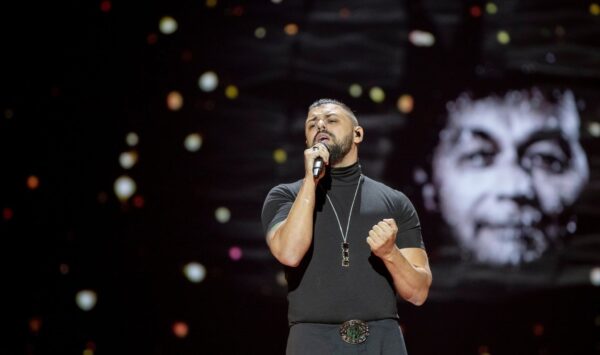

Hungary, absent from the Eurovision Song Contest since 2019, is now considering a potential return for the 2027 edition. Recent reports indicate significant developments, with the European Broadcasting Union (EBU) reportedly offering a reduced participation fee and an extended deadline for the Hungarian public broadcaster to confirm its involvement. This news follows a major reform of Hungary’s public media landscape, signalling a new chapter for the nation.
The prospect of Hungary rejoining the Eurovision Song Contest has gained considerable momentum, as the European Broadcasting Union (EBU) has reportedly agreed to a significant reduction in the participation fee for the Hungarian public broadcaster. Hungary last participated in the contest in 2019, with Joci Pápai representing the nation with the song ‘Az én apám’.
According to reports from Hungarian public media, the interim CEO of the public broadcaster, Dr. Horváth András, recently engaged in discussions with the EBU regarding Hungary’s potential comeback. A crucial outcome of these talks is reportedly the EBU’s offer of a substantially lower participation fee, a factor that could make a return more financially viable for the country.
In a further positive development, the EBU has also reportedly granted Hungary an extension to confirm its participation for Eurovision 2027. The new deadline is set for December 7, 2026. This extension provides the Hungarian public media with additional time to assess the terms and make a final decision.
The push for Hungary’s return has been championed by the newly-elected Prime Minister, Péter Magyar, who publicly stated his intention to instruct government officials to examine the conditions necessary for a comeback to the contest. This directive was issued as early as May 2026, indicating a strong political will behind the initiative.
Telex’s article reads:
However, no decision has yet been made on whether Hungary will actually return to Eurovision. Horváth indicated during the meeting that this will be decided by the final management of the transforming public media. The final decision on the 2027 participation can be made by the new management of the public media after the preliminary approval of the newly formed Independent Public Media Board.
These discussions occur amidst a significant restructuring of the Hungarian public media system. In July 2026, the Hungarian Parliament approved reforms that will see the current organisations, MTVA and Duna Médiaszolgáltató, replaced by new entities: Magyar Rádió és Televízió (Hungarian Radio and Television) and Magyar Távirati Iroda (Hungarian Telegraph Office). The impact of this reorganisation on EBU membership, and consequently Eurovision participation, is a key consideration, though precedents exist for new broadcasters to secure participation while membership applications are pending.
While an official confirmation of Hungary’s participation in Eurovision 2027 is still pending, the EBU’s concessions regarding the fee and deadline extension are seen as pivotal steps that could pave the way for the nation’s long-awaited return to Europe’s biggest music stage.
Hungary debuted at the Eurovision Song Contest in 1994 and is yet to win the event, its best placing in the contest was achieved in 1994 with Frederika Bayer, who placed 4th in Dublin.