
 Eurovision News
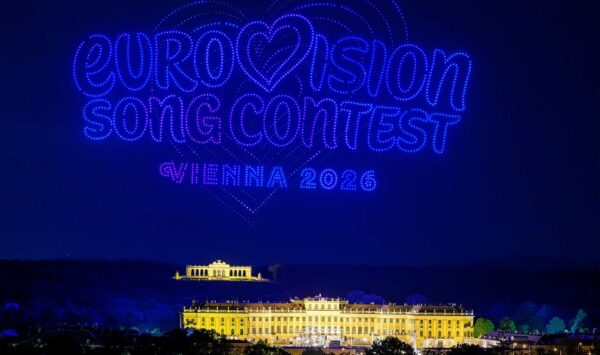

Tonight, hundreds of millions of people will watch the Eurovision Song Contest final in Vienna. For a few hours, Europe will once again present itself as united through music, spectacle and shared emotion. But outside the arena, Eurovision is facing a crisis far more serious than voting controversies or political protests.
The European Broadcasting Union (EBU), the organisation behind Eurovision, is struggling to defend a concept of neutrality that audiences no longer believe exists.
The current debate surrounding Israel’s participation has exposed something much deeper than a disagreement about one country. It has revealed a structural contradiction at the heart of modern Eurovision itself.
For decades, Eurovision survived geopolitical tensions by insisting on one principle: the contest is “non-political”
That claim was always partly fictional. Eurovision has long functioned as a form of cultural diplomacy and soft power. Countries use the contest to shape international image, project modernity and reinforce national identity. Political symbolism has always existed around the event, even when officially denied.
But the illusion of neutrality still worked because the EBU rarely crossed clear geopolitical lines.
Russia’s exclusion after the invasion of Ukraine changed that permanently.
Whether intentionally or not, Eurovision demonstrated that participation could be affected by geopolitical conflict. From that moment onward, every future controversy would inevitably be compared to Russia.
The EBU has attempted to defend itself institutionally by arguing that Russia’s exclusion was not directly about war, but about broadcaster compliance and editorial independence. In a recent interview with LBC, Eurovision director Martin Green suggested that Russia could theoretically return if its broadcaster once again met EBU membership standards.
Legally and procedurally, this distinction matters. The EBU does not want Eurovision to become an international tribunal deciding which governments are morally acceptable. Such a framework would immediately raise impossible questions: Which wars qualify? Which human rights violations matter? Who decides where the line is?
The broadcaster-based approach gives the EBU a technical framework rather than an openly political one.
But the public does not experience Eurovision as a competition between broadcasters.
Audiences do not emotionally watch broadcasters compete. They watch countries compete. They see flags, national identity and geopolitical symbolism, despite the removal of flags from the screen before each participating country. The institutional language of the EBU and the emotional experience of viewers are no longer aligned.
That disconnect is now becoming impossible to manage.
The controversy surrounding Israel’s participation is not only about Israel. It is about the collapse of Eurovision’s old binary understanding of neutrality.
The EBU still communicates as if broadcasters can be neatly separated into categories such as “independent” and “propaganda”, or states into “acceptable” and “unacceptable”. But modern audiences increasingly see these questions as existing on a spectrum.
Public broadcasters across the world operate under different degrees of political pressure, state influence and national interest. Very few are completely detached from government narratives or geopolitical realities.
This does not mean all broadcasters are equivalent. They are not.
But it does mean audiences increasingly reject simplistic institutional distinctions that appear technical while carrying obvious political consequences.
Ironically, the harder the EBU tries to defend Eurovision as apolitical through procedural language and legal frameworks, the more political the contest appears.
What viewers increasingly perceive is not neutrality, but institutional avoidance.
And that may be the EBU’s real crisis.
Eurovision no longer exists only as entertainment. It has become a global cultural event where politics, identity, media and diplomacy inevitably collide. The organisation governing it still relies on a neutrality model designed for a different era, one where audiences were more willing to separate culture from geopolitics.
That separation no longer holds.
The question facing Eurovision today is not whether politics belong in the contest. Politics are already there.
The real question is whether the EBU can continue pretending otherwise.