
 Eurovision News
  Ukraine
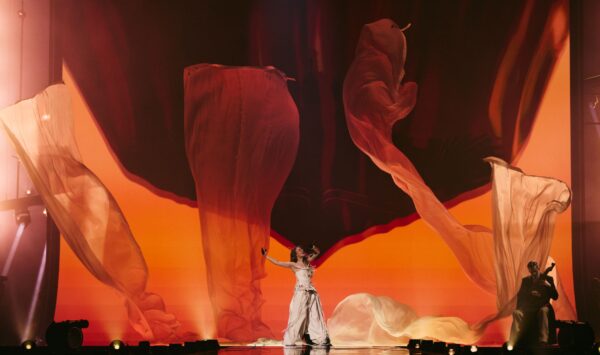

Ukraine’s representative for the 70th Eurovision Song Contest, LELÉKA, has completed her first rehearsal on the main stage in Vienna. Photos of the performance were released on the official Eurovision website and Suspilne Ukraine’s social media pages, offering a glimpse into her highly anticipated act.
The rehearsal, held at the Wiener Stadthalle, was largely closed to the media, a practice mirroring last year’s approach to maintain an element of surprise. However, dedicated fans were able to catch written descriptions of the performance shared on Reddit, providing early insights into LELÉKA’s staging.
LELÉKA graced the stage alongside bandura player Yaroslav Dzhus, whose Ukrainian folk instrument is set to be a significant highlight of the performance. This marks the first time a bandura player has performed as part of a competing act at the Eurovision Song Contest.
The singer’s striking outfit, a departure from her Vidbir look, was meticulously designed by Lilia Litkovska (LITKOVSKA brand), with contributions from stylist Margarita Shekel’s team.
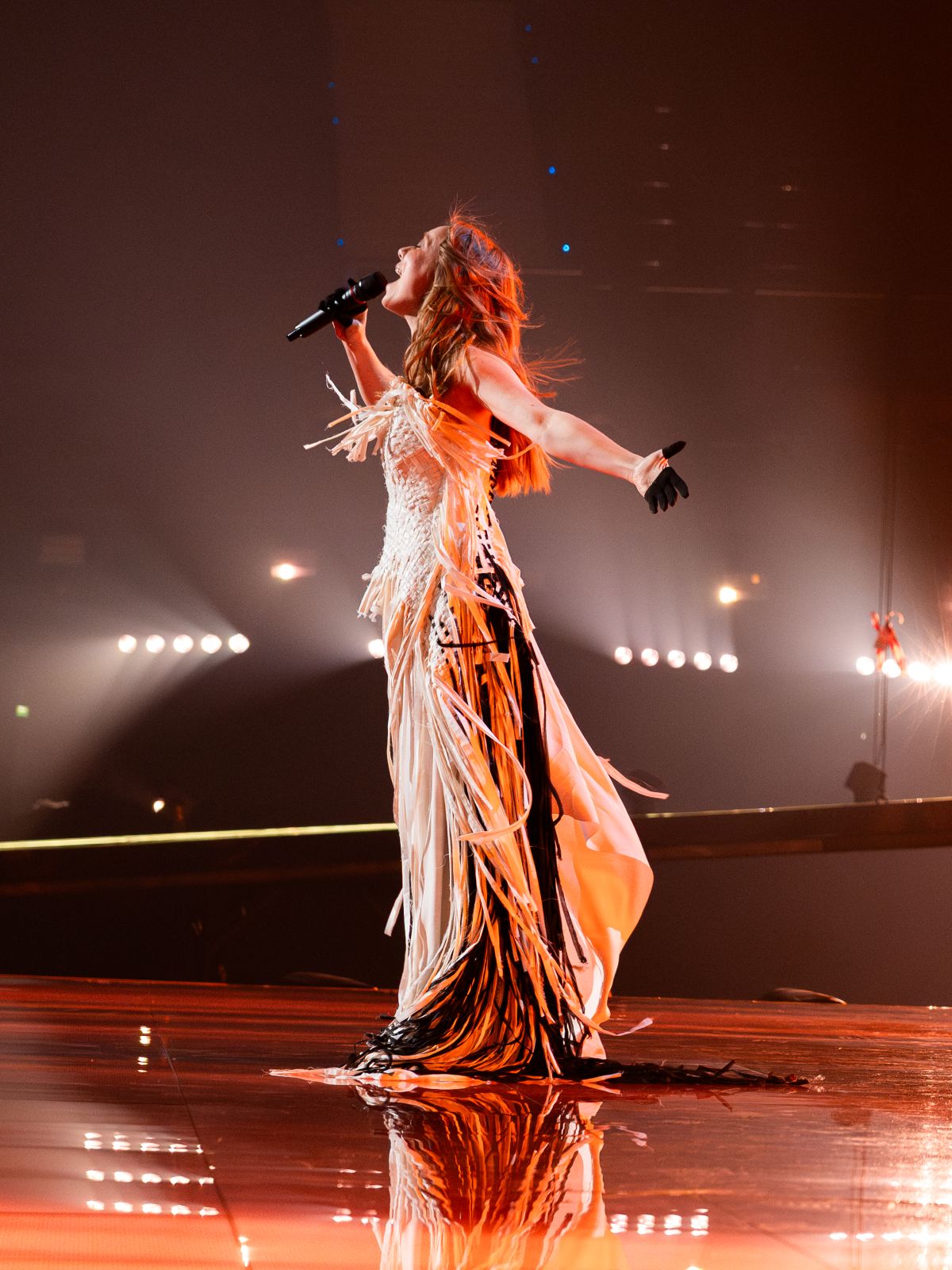
Inspired by LELÉKA’s unique identity and music, the LITKOVSKA team crafted a visually stunning costume. The centrepiece is a woven corset, intricately made from approximately 20 metres of eight different natural fabrics, including silk, viscose, and silk organza, requiring hours of dedicated handwork.
The costume subtly references LELÉKA’s pseudonym, which means ‘stork’ in Ukrainian, through its silhouette and movement. The elongated lines and flowing elements evoke a sense of flight, creating a visual trajectory akin to a bird soaring through the air, without a literal depiction.
Lilia Litkovska shared her vision for the design:
This costume is a story. I wanted the audience to see the dress blossoming through the song, where every element is a personal symbol woven into the fabric of the performance. The stork’s wing is no coincidence here: it is a visualisation of the artist’s inner freedom and a reminder of just how powerful our natural energy is when we allow ourselves to stand tall.
Stylist Margarita Shekel elaborated on her creative process:
LELÉKA is not just a performer: behind her stage persona lies a very private world, and my task was to balance this authenticity with the power of visual expression on the big stage. I viewed the weaving of the corset as an architecture — as precise and organic as a stork’s nest or the intertwining of vines in a wattle fence. It is a craft that has existed outside the catwalks for centuries, and it is here that it rises to the level of couture. We also built the look around the vocals and the staging — the costume had to come alive in motion, opening up differently with and without wind. It was a challenge and, at the same time, a sacred task.
Meanwhile, Yaroslav Dzhus‘s costume pays homage to the Cossack era, a period when musicians were revered as guardians of memory and the voice of the community. His attire features a hand-embroidered beaded wrap-around skirt and woven fabric, further enhancing the cultural narrative of the Ukrainian performance.