
 Eurovision News
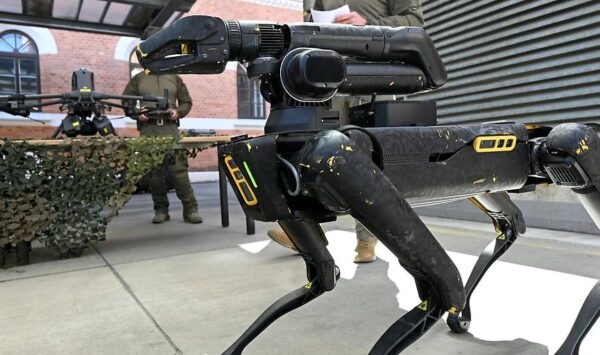

Police and authorities are stepping up security measures for the Eurovision Song Contest 2026 in Vienna. With 250 security personnel currently planning operations, the event will see the deployment of advanced technology, including a robot dog and various drones. These high-tech additions aim to ensure comprehensive safety across the city during the contest.
The Eurovision Song Contest 2026, set to take place in Vienna, Austria, is implementing an advanced security plan to ensure the safety of all participants, visitors, and residents. Local police and authorities are working diligently, with 250 security personnel actively involved in planning and coordinating the extensive measures across the city.
A notable aspect of this year’s security strategy is the integration of cutting-edge technology. Among the sophisticated equipment being deployed are a robot dog and various types of drones. These high-tech devices are expected to provide enhanced surveillance capabilities and assist in monitoring areas that might be difficult to access otherwise.
The use of such innovative tools underscores Vienna’s commitment to hosting a secure and successful event. The comprehensive security concept, developed in close collaboration with the Vienna police, the Interior Ministry, and other relevant authorities, aims to address all potential challenges and maintain a safe environment throughout the duration of the Song Contest.
In addition to these technological advancements, airport-level security measures will be in place at the Wiener Stadthalle, the venue for the contest. This includes strict entry checks, metal detectors, X-ray scanners for all items entering the building, and a no-bag policy for attendees. Approximately 500 security personnel will be deployed daily at the Stadthalle alone, supported by 180 new surveillance cameras.
The Grand Final of the Eurovision Song Contest 2026 is scheduled for Saturday, 16 May, with semi-finals on 12 and 14 May, all taking place at the Wiener Stadthalle.