 Eurovision News
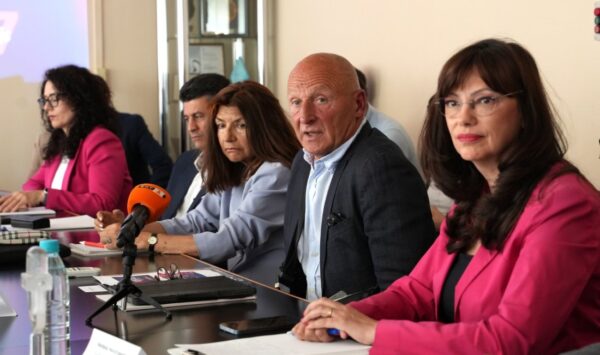

The competition to host the Eurovision Song Contest 2027 in Bulgaria has officially commenced. Bulgarian National Television (BNT) has today met with representatives from four cities vying for the prestigious role: Sofia, Plovdiv, Varna, and Burgas. This marks the beginning of the formal bidding process.
Bulgaria kicks off host city selection for Eurovision 2027
Following Bulgaria’s victory at the Eurovision Song Contest 2026, the national broadcaster BNT is now in full swing with preparations to host the event in 2027. Today, BNT held initial meetings with the four cities that have expressed interest in becoming the host city for the 71st edition of the contest.
The cities – Sofia, Plovdiv, Varna, and Burgas – were presented with the comprehensive requirements and technical specifications they must meet to be considered. BNT’s Director General, Milena Milotinova, has indicated that the final decision on the host city is expected by the end of July. In principle EBU’s rule stipulates that the Eurovision host city should be determined in August, but this year there is a rush to shorten the procedures so that the administration of the respective winning city can launch its public procurements.
Milena Milotinova (BNT Director General) says:
A very large set of requirements, including for a cultural program that the host city offers, including for a venue and accompanying infrastructure. A working group will evaluate their proposals.I want to thank the Bulgarian government for the lightning-fast reaction immediately after Bulgaria’s hosting was announced – they expressed their support for the hosting.
Andreas Schmidt (European Broadcasting Union) says:
BNT will not only be an organizer, it will be a partner with the host city so that Eurovision can be built as a complete event. And here we are not talking about an organization of 2-3 months, but a whole year of intensive preparation.
The Contending Cities
Sofia, the capital city, is widely considered a frontrunner due to its existing infrastructure, international airport, and the Arena Sofia (also known as Arena 8888), which boasts a capacity of nearly 18,000 spectators. Sofia also has experience hosting large international events, including the Junior Eurovision Song Contest in 2015.
Burgas has also emerged as a strong contender, with the Arena Burgas, opened in 2023, capable of holding up to 15,000 people for concerts. Both Sofia and Burgas are currently seen as the only two cities with indoor arenas that meet the EBU’s capacity requirements without significant expansion.
Plovdiv, Bulgaria’s second-largest city and a city with a rich cultural heritage, has also confirmed its intention to bid. However, its largest indoor venue, Kolodruma, primarily functions as a velodrome and may require substantial modifications to meet Eurovision’s technical and capacity demands.
Varna, a major Black Sea coastal city, is also in the running. Mayor Blagomir Kocev has highlighted the city’s tourism infrastructure and cultural readiness. However, Varna’s Palace of Culture and Sports has a reported capacity of 6,000, which falls short of the EBU’s minimum requirement, suggesting significant upgrades would be necessary.
BNT and the EBU will meticulously review each bid to ensure Bulgaria delivers a spectacular Eurovision Song Contest in 2027.