
 Eurovision News
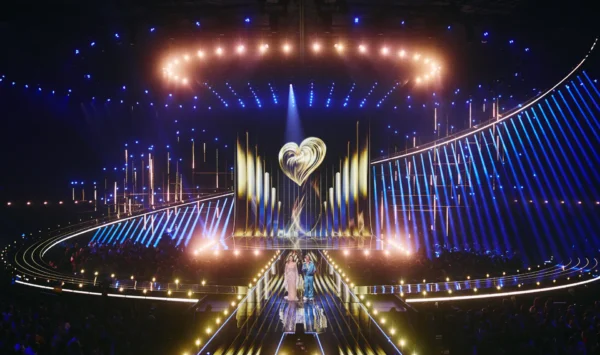

Here we go again! In just a few hours, millions across Europe, Australia and far beyond will sit down to watch the Grand Final of the Eurovision Song Contest 2026, which is taking place in Vienna, Austria. The two semi-finals have determined 20 qualifiers who joined the 5 automatic finalists, the jury show has already taken place, the betting odds have been shifting endlessly throughout the week and fan debates have reached their climax.
And yet, Eurovision history tells us something important: the winner is often decided by factors that cannot be fully measured by betting odds, streaming numbers, or rehearsal clips alone.
Because when the lights go on tonight, the contest will become something entirely different.
This is the moment where psychology, emotion, timing and collective memory begin to matter just as much as vocals or staging. Every year, there are silent patterns hidden inside the Grand Final that quietly shape the final scoreboard by the end of the night.
Here are five of the factors that could ultimately decide both the winner and the overall scoreboard of Eurovision 2026.
1. The 3-minute memory test
The most “dangerous” entry tonight may not be the most technically perfect one.
It may simply be the one viewers still remember after 25 performances.
Eurovision is unlike almost any other music competition in the world because audiences consume songs rapidly, one after another, in an emotionally overwhelming television event. By the second half of the show, viewers are no longer comparing songs in detail. They remember moments instead.
This could be a single visual, a camera shot, a final vocal climax or one emotional expression directly into the lens.
The entries that survive the “3-minute memory test” are often the ones that rise unexpectedly during the voting sequence.
Tonight, apart from “Who performs best?”, the question tonight could be “Who leaves the strongest imprint”?
2. Jury magnet or televote explosion?
Every Grand Final develops its own invisible battle between jury precision and public emotion.
Some songs are built for professional juries: controlled vocals, fresh and sophisticated composition, polished structure, artistic restraint are factors that usually determine decisively the juries’ verdict.
At the same time, there are others designed to create instant audience connection such as explosive choruses, emotional authenticity and crowd participation moments.
But the entries that become truly dangerous are the ones capable of balancing both voting bodies. We have witnessed jury high-performers collapse under weak televote support, while televote favourites sometimes struggle to convince professional panels.
Tonight’s winner will likely be the act that feels credible to juries while remaining emotionally irresistible to viewers at home.
That balance is extraordinarily difficult to achieve and only a handful of finalists may truly possess it this year.
3. Running order still matters more than people admit
For years, Eurovision fans treated the running order as simple luck. Since 2013, it has been anything but random.
The Grand Final running order is carefully crafted by the show’s producers in order to create the strongest possible television experience: balancing tempo, emotion, visual identity and audience engagement throughout the night.
That means that as with every year, every placement inside tonight’s show in Vienna tells a story and could play its own role in the results. Fans know that.
A powerful ballad may be strategically placed after an intense uptempo performance to create emotional contrast. Two visually similar entries are often separated deliberately so they do not “cancel each other out”. Producers also consider technical stage transitions, pacing, viewer attention span and momentum across nearly four hours of live television.
And while late performances often retain a natural advantage in audience memory, modern Eurovision production is designed to ensure that every song gets its own moment to stand out.
Tonight, some countries may benefit enormously from the emotional flow surrounding their performance. Others may face the challenge of following a hot favourite, surviving a difficult transition, or competing directly against entries with similar energy and aesthetic.
4. The “Goosebumps Moment”
Every Eurovision winner creates a moment. It’s the moment when the arena changes and the atmosphere shifts. Viewers stop casually watching and suddenly become emotionally involved.
It may happen during a vocal peak, it could be due to a detail in staging, or even due to a lyric that many of us can relate to. When that happens, people feel it instantly.
That emotional reaction cannot always be predicted from rehearsals or short clips online. Sometimes the full impact only appears when the performance is experienced inside the live flow of the Grand Final itself.
And once that collective emotional connection is created, momentum can become unstoppable.
Tonight, somewhere inside these performances, there may already be a future Eurovision moment waiting to happen.
5. Never underestimate the power of surprise
Every year, attention naturally focuses on the biggest favourites. The betting odds, fan rankings and rehearsal reactions often create the impression that the winner has already emerged long before the first finalist even steps onto the stage.
But Eurovision scoreboards are also shaped by something else: the unexpected rise.
Some of the contest’s most memorable results have come from entries that quietly built momentum at exactly the right moment. It can be a performance that suddenly connects with viewers during the live show, a country underestimated throughout the season, or a song that feels far more authentic and impactful in the live events than it ever did in rehearsals.
At Eurovision, momentum can change within minutes. That possibility is part of what keeps the contest unpredictable, even after seven decades of Eurovision history.
Some final thoughts
At the end of the show tonight, one country will lift the trophy in Vienna and become part of Eurovision history.
Because Eurovision has always been more than a song contest. Somewhere between the lights, the cameras and those three minutes on stage, tonight the performance that felt unforgettable will triumph.