 Eurovision News

Dear Eurovision,
I am a fan — your fan. One of those who spends weekends in February and March following national selections in languages he does not even understand. The kind of fan who is a member of an OGAE, who collects merchandise, travels across Europe for Europarties, and has had the privilege of attending the Contest in person at least once. The kind who revisits past editions for nostalgia and tracks news and trends through multiple apps and websites. In short, a committed fan.
I have followed you for most of my teenage and adult life, and I have brought many people with me along the way. I have spoken about you at family gatherings, over drinks with friends, and — yes — even at my wedding. The month of May has always been the highlight of my year: the moment when everything comes together, when it all finally makes sense. Few things compare to the excitement of those 45 minutes of voting at the end of the Grand Final.
Beyond the show, lights and music, I have always been fascinated by Eurovision as an instrument of soft power. For more than seventy years, countries have used the Contest for nation branding — through hosting, postcards and performances. The social and political history of much of Europe, with very few exceptions, can be traced through Eurovision’s evolution. Scandals, too, have always been part of its fabric, and one could argue that a Eurovision season without a bit of drama would feel strangely empty.
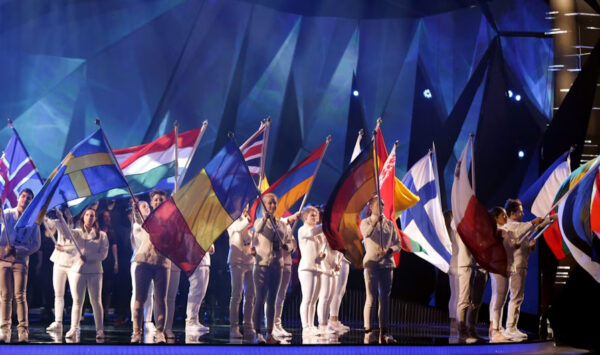
At its best, Eurovision has been a place where people from across Europe, Australia, and beyond come together to celebrate music. A place of flags and sequins, of joy and friendly competition.
Dear Eurovision,
In recent years, I have found myself in countless conversations — at work, among friends, within my own family — explaining why I continued to defend you, even amid political controversy. I stayed loyal for as long as I could, sometimes at the cost of relationships with those whose convictions were stronger than my patience.
I am writing this letter because I no longer recognise the environment that once defined you. The Eurovision I learned to love, and to defend instinctively, feels distant. Prerecorded applause is used to mask disapproval in the arena, boycotts are organised, tensions escalate, divisions deepen and the overall atmosphere grows increasingly polarised. “The show must go on” has been applied so rigidly that it now feels emptied of meaning.
This anniversary does not feel like a temporary difficulty or a one‑off controversy. It cannot be dismissed as a momentary crisis. It marks a break with the past, and the consequences will extend well beyond this year. The boycott surrounding this edition is the symptom of a deeper imbalance – one where participation is conditional and narratives are tightly framed so that disagreement is contained, alternative readings are marginalised, and dialogue is reduced to compliance. In that sense, the Contest no longer feels like a shared space shaped by its many voices.
I write this not out of hostility, but out of long‑standing attachment — and concern. Eurovision has mattered because it created a space where plurality could exist, where disagreement did not cancel out shared joy, and where participation did not require unanimity. That balance now feels increasingly fragile. I do not expect Eurovision to be free of tension or controversy; it never has been. But I continue to believe that its greatest strength lies in its capacity to bring people back together through dialogue: by creating room for listening rather than silencing, for nuance rather than dogmatism, and for reconciliation rather than division.
The story of Eurovision has never been one of perfection, but of constant renewal. Today, that renewal calls for honesty about where we stand, and the courage to change course. Preserving the Contest as a space for all requires clarity about the present: the path we are on is not viable. Yet the possibility of a more inclusive future remains, if we are willing to choose it.
Yours sincerely,
A long‑standing fan