

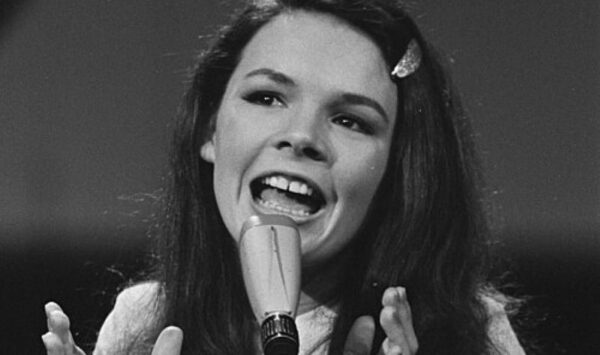
Ireland’s first Eurovision winner Dana has spoken out against the country’s decision to boycott the Eurovision Song Contest 2026 over Israel’s participation, warning that the contest is losing its role as a non-political space for cultural unity.
Reacting to Ireland’s withdrawal, Dana Rosemary Scallon, who won the Eurovision Song Contest in 1970, said the European Broadcasting Union (EBU) is struggling to preserve the contest’s original purpose. She argued that Eurovision was created to allow countries to come together beyond politics, particularly in the aftermath of the Second World War.
Ireland announced earlier this month that it would not take part in Eurovision 2026 after the EBU confirmed Israel’s inclusion despite the ongoing war in Gaza and accusations of rule violations. The Irish national broadcaster RTÉ described participation as unconscionable in light of the humanitarian crisis, a stance later supported by Taoiseach Micheál Martin.
Dana, who later served as a Member of the European Parliament, acknowledged the deep emotions surrounding the conflict but expressed hope that music could still act as a bridge. She suggested that Eurovision, alongside sport, remains one of the few international spaces where unity is still possible, while also calling on the contest to reflect on its current direction.
Growing divisions within Eurovision
Ireland is not alone in its decision. Spain, the Netherlands, Slovenia and Iceland have also confirmed their withdrawal from the 2026 contest. The announcements followed an EBU meeting where broadcasters were informed that no vote would be held on Israel’s participation. Spain’s national broadcaster RTVE said the outcome had increased its distrust in the organisation of the contest.
A historic Eurovision figure
Dana was just 18 years old when she won the Eurovision Song Contest in 1970 with All kinds of everything, which went on to top charts internationally. Born in Derry and now living in Galway, she later pursued a political career, serving as an MEP between 1999 and 2004 and running twice for the Irish presidency.
https://youtu.be/sZ8W9oOgjM4?si=OM5zlGFrxW0HlaEJ
The Eurovision Song Contest, founded in 1956 in Lugano, Switzerland, has grown into one of the world’s most-watched cultural events. However, the debate surrounding Eurovision 2026 highlights the increasing challenge faced by the EBU in maintaining the contest’s long-held claim of political neutrality.