
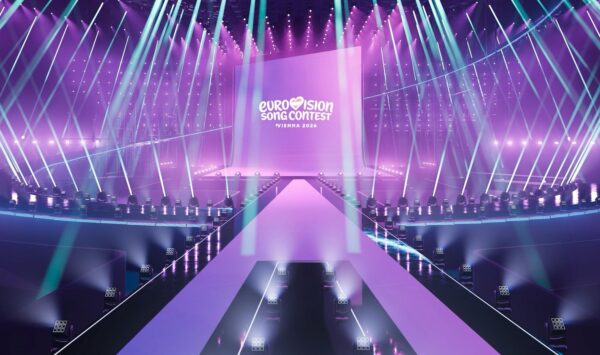
ORF, the Austrian national broadcaster and the EBU have unveiled the Eurovision 2026 Lighting Design Concept.
The Eurovision 2026 Lighting Design Concept promises to be sustainable, creative and technically redifined. The visual concept for ESC 2026 has been developed and designed by Tim Routledge.
Tim is an internationally acclaimed lighting designer who has gained much fame, name and recogtion thanks to his work and great talent. He has worked both at the 2023 ESC in Liverpool and at the ESC 2025 in Basel. Vienna will be his third ESC.
Tim says:
The Eurovision Song Contest is all about big moments. The challenge was to design something that appears impressive and large while being significantly more responsible behind the scenes. Using 100 per cent LED and laser technology on this scale shows that you can have both – spectacular visuals and sustainable production.
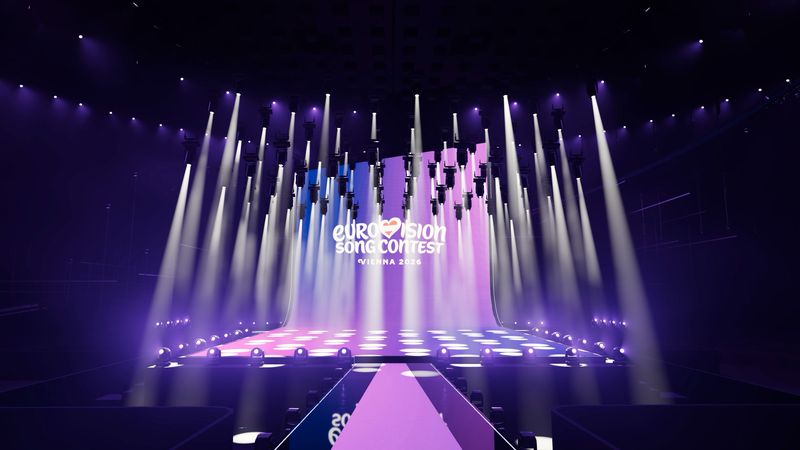
The EBU’s press release reads:
The visual concept by internationally renowned lighting designer Tim Routledge will feature over 2,100 LED and laser units, as well as more than 8,500 individually controllable LEDs. Additionally, 80 high-speed cable winches will create movable light effects – a first in the world’s largest televised music event.
The Eurovision Song Contest 2026 will be broadcast live from the Vienna Stadthalle on 12 | 14 | 16 May. The three Live Shows will present viewers with a lighting design that aims to give each performance its own visual signature, transforming Austria’s largest indoor arena into a dynamic, immersive space.
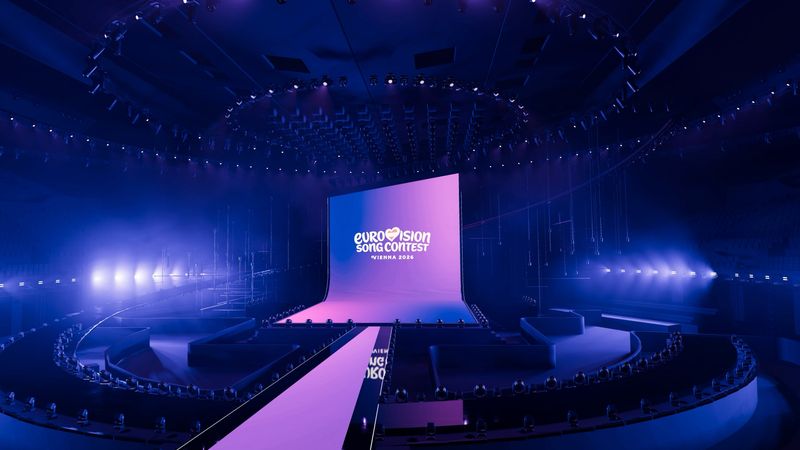
The official press release continues to read:
Lighting designer Tim Routledge emphasises that large visuals and sustainable production are not mutually exclusive: for the first time, a completely LED and laser-based system will be used, replacing traditional lighting completely and thereby significantly reducing energy consumption, heat and material usage. With a 100 per cent usage of modern, energy-saving technology, Vienna 2026 is setting new standards in sustainability.
The scale of the implementation will be grand. Hundreds of crew members will for several weeks be on site at the Stadthalle overseeing setup, programming, and integration with video, automation and camera technology. A team of lighting programmers will work around the clock to coordinate each light signal precisely.