

The lights might be off at teatro Ariston in the Ligurian coastal city of Sanremo, but the excitement for the week that has just concluded is still very much on. We now have the name of the 76th Sanremo Music Festival and at the same time the next representative of Italy in Eurovision.
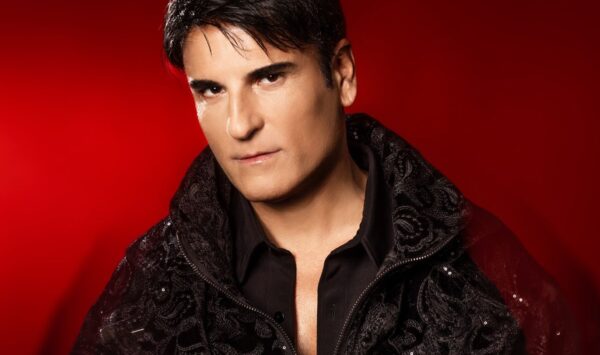
Sal Da Vinci won the Sanremo Music Festival in the night from Saturday to Sunday with the song Per sempre si. A bit by surprise, some might say. While indicated among the possible winners, Sal Da Vinci took the spot from other top contenders such as Fedez e Masini, who were considered by most as capable of snatching the trophy at the beginning of the week, but also Ditonellapiaga, who was consistently pointed by the press room as the most worthy recipient.
However, in such a peculiar edition of Sanremo where – let’s admit it – with the absence of many heavy names of the Italian music industry, the array of possible outcomes was larger than in the past, a surprise like Sal Da Vinci was something waiting to happen.
Sal Da Vinci, also known as Salvatore Michael Sorrentino, was born in New York in 1969. He is an actor and singer with dual citizenship US American and Italian. His musical career began at the age of six and has released 14 albums. He brought the Neapolitan song back to the centre stage after several unsuccessful attemps from representatives from Naples in recent years.
Sal Da Vinci at Sanremo
Sal Da Vinci first competed in the Sanremo Music Festival in 2009 with the entry Non riesco a farti innamorare, reaching the very respectable third place behind the winner Marco Carta (La forza mia) and runner-up Povia (Luca era gay).
Seventeen years on, at his second participation, he has gone all the way to the victory by a very narrow margin (22,2% to 21,9%) over second-placed Sayf (Tu mi piaci tanto).
Sal Da Vinci at Eurovision
In the press conference at the end of the competition Sal Da Vinci confirmed that he will represent Italy at the forthcoming Eurovision Song Contest in Vienna, Austria. Member of the Big5, Italy is automatically qualified to the Grand Final on Saturday 16 May.
Notably, he declared:
“It’s something that touches me, and I think it’s such a beautiful and important thing to bring Italian music outside our country. This is a source of pride. I’ve always seen music as a moment of great unity and peace in the world. At such an important event in Europe, Italy deserves to be there.”
He will follow the footsteps of Lucio Corsi, who represented Italy in Basel, Switzerland in May 2025 with the entry Volevo essere un duro.
Discover the Italian entry to Eurovision here: